

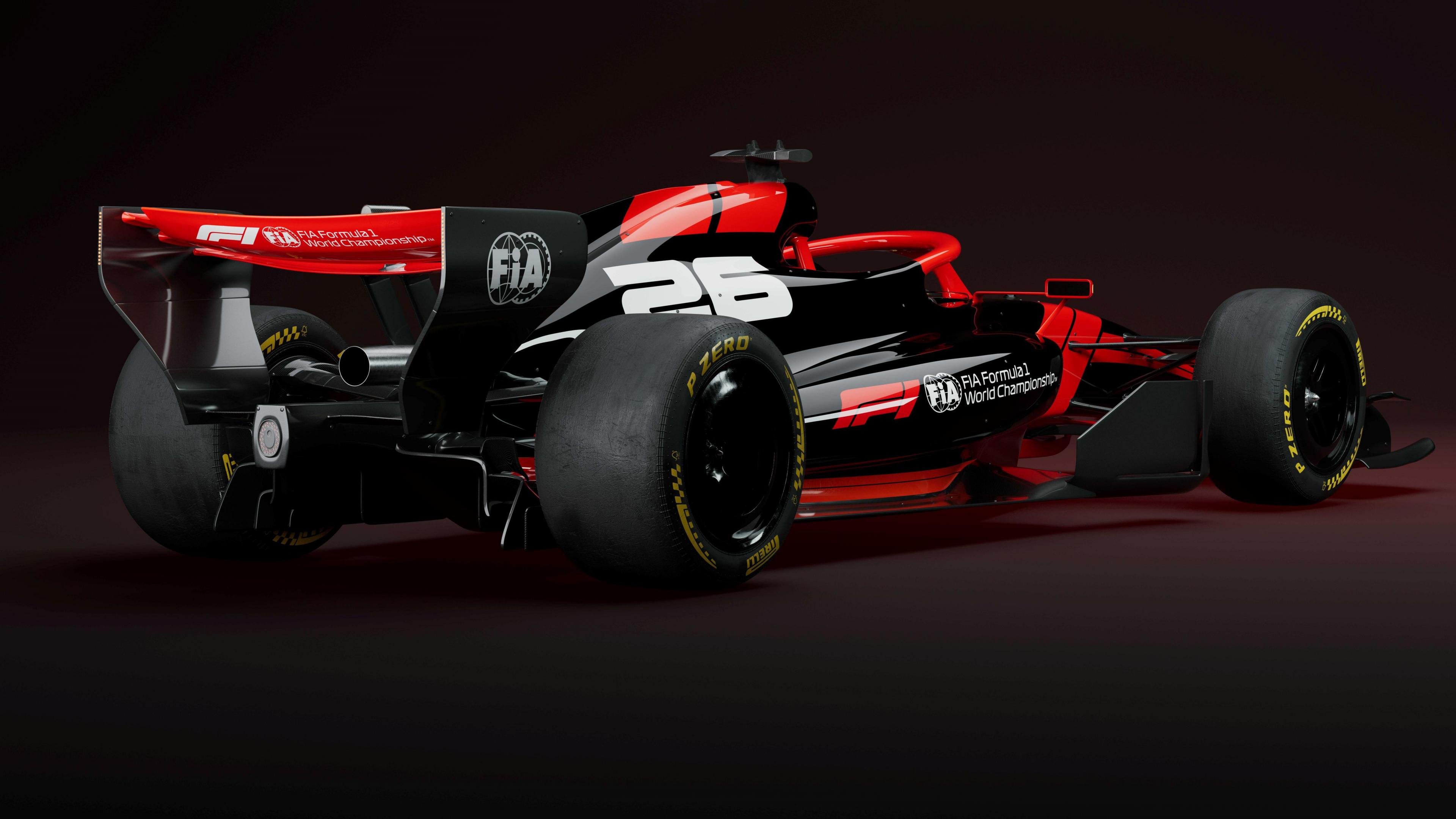
The 2026 Formula 1 cars are set to be lighter, more agile and sustainable relative to present-day cars.
Formula 1 has revealed the official language that will be used to describe the advanced features of its revolutionary 2026 rulebook.
The championship is introducing what is considered the biggest technical shift in its illustrious history for the 2026 campaign, featuring revised car and engine specifications and the compulsory introduction of eco-friendly fuels.
The updated 1.6-litre V6 turbo hybrids, which retain the 1.6-litre V6 turbo hybrid, boast a greatly enhanced energy storage, requiring major innovations in the vehicles' aerodynamic design.
Throughout races, pilots will carefully oversee battery power – sometimes even flying laps – to achieve the best lap time.
Extensive fan consultation were carried out with a wide range of fans, including new, casual and core fans, to determine which terminology would aid comprehension of the main elements of the new regulations.
The primary aim was to render a range of advanced technical aspects of the racing as accessible as possible for the broadest viewership.
Consequently, initial designations for certain devices – such as "alphabetical mode names" for the adjustable aero – have been discarded in favour of descriptive names that clearly indicate the primary purpose of the system.
What's the New Technology?
According to rule-makers that drivers will have greater control to make decisions regarding energy deployment, energy recovery, and saving energy.
The upcoming changes feature a range of settings that will be clearly indicated on TV overlays to improve the fans' insight of the race battle.
- Overtake Mode: This takes over from the existing Drag Reduction System. It provides a short boost of battery power available when a driver is close behind the vehicle in front to facilitate an overtake.
- Power Mode: This is a manual power boost from the hybrid system that can be utilized during offensive or defensive moves. It provides the driver peak output at the activation of a control.
Both of these strategic tools will have to be used with calculation, as the overall battery capacity is capped.
- Active Aero: Both the front and rear wings adjust their angles – spreading on the high-speed sections for low aerodynamic resistance and top speed, and angling down in the corners for optimal cornering performance.
- Battery Recharge: Drivers can harvest energy with energy harvested under braking, or during partial power application at the conclusion of a straight or in corners where only limited engine output is applied.
2026 Car Specifications
The next-generation machines will be reduced in size and weight compared to the 2025 spec, with a car length shortened by 200mm to 3,400mm, overall width cut by 100mm – down to 1,900mm – and the car weight lowered by 30kg.
Total aerodynamic grip is anticipated to be reduced by approximately fifteen to thirty percent, although teams will undoubtedly recover some as they develop their cars.
Aerodynamic drag has been cut by 40%. The cars will feature active aerodynamics – both wings will adjust on the straights to cut resistance and enhance velocity and revert into place for optimal grip in corners.
Tyres will keep the current rim size, but the rubber compounds will be narrower, by a quarter-centimetre on the front and 30 millimetres on the rear axle.
Power Unit Revolution
The new power units will have an near-equal balance in horsepower generated by the ICE and the battery and motor, up from about 20% battery contribution this year.
The ERS setup is made less complex through the removal of the MGU-H, the complicated and costly device that generated electricity from the turbocharger.
Every car on the grid will be obliged to compete on 100% sustainable fuel, manufactured from biomass or lab-created processes.


